

How to Calculate Cash-on-Cash Return (With a Real Memphis Duplex)
Most investors can recite a cap rate. Fewer can tell you what their own cash is actually earning. That is the number cash-on-cash return answers, and it is the one that decides whether a deal fits your portfolio.
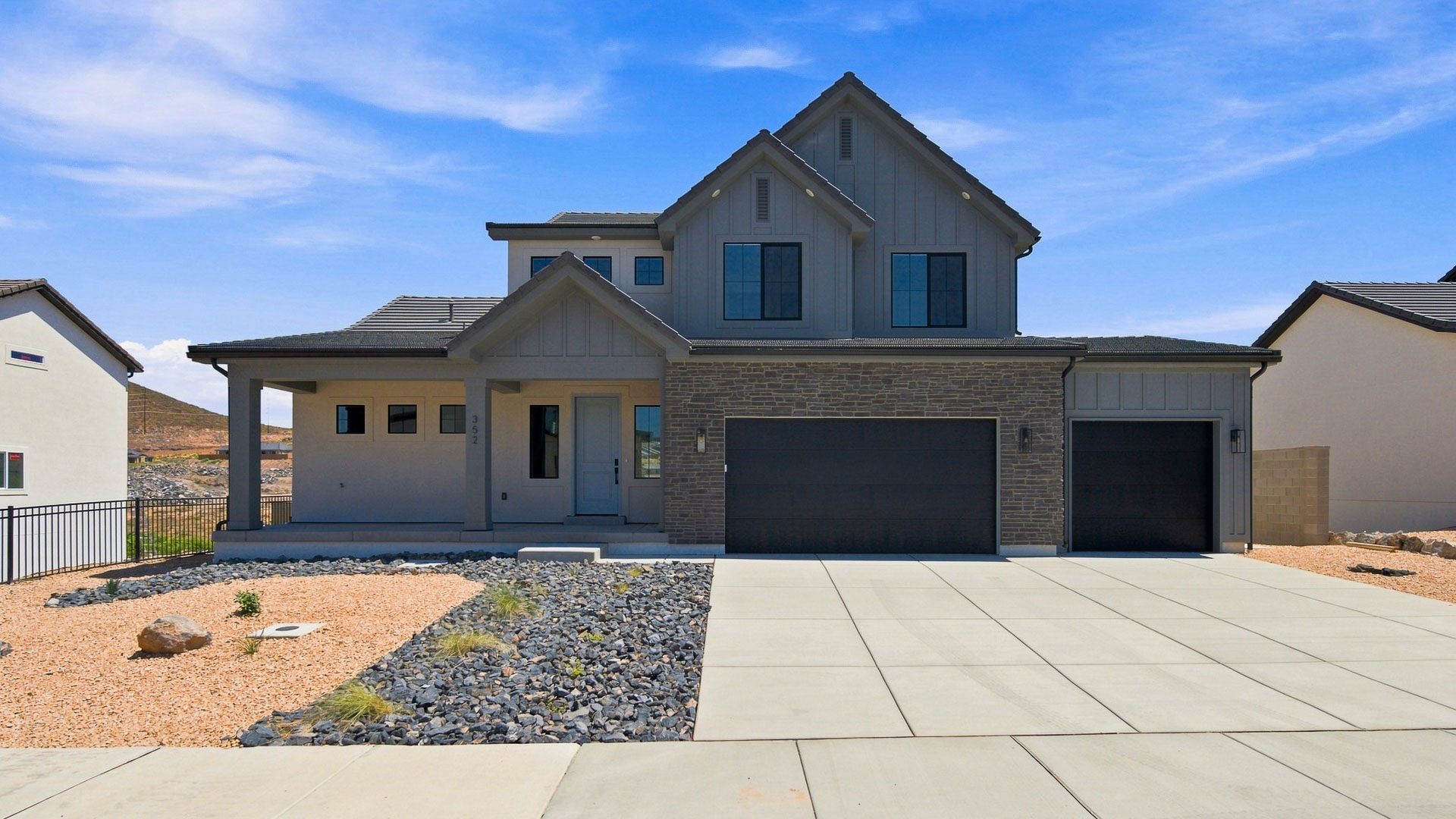
In this guide we'll calculate it from scratch, using a real property on the Build 2 Rent marketplace: a new-construction duplex in Memphis, Tennessee.
"Cap rate tells you what the property earns. Cash-on-cash tells you what your money earns."
The formula
Cash-on-cash return = Annual pre-tax cash flow ÷ Total cash invested
That's it. The skill is knowing what goes into each side.
- Annual cash flow is the rent you collect, minus everything you pay out in a year, including the mortgage payment.
- Total cash invested is the money you actually bring to the table: down payment, closing costs, and any loan points. It does not include the loan itself.
Because the loan is left out of the bottom number, cash-on-cash shows you the effect of financing. Cap rate, by contrast, ignores financing entirely.
Our example property
| | | |---|---| | Property | New-construction duplex (2 units), Memphis, TN | | Price | $309,500 | | Total rent | $2,500 a month ($30,000 a year) | | Seller incentive | One year of free property management |
For the walkthrough we'll use the standard conventional-loan assumptions in the Build 2 Rent calculator: 25% down, a 30-year fixed loan at 5.5%, 4 points, and 2.5% closing costs. You can change every one of these in the Deal Analyzer.
Step 1: Start with the rent, then allow for vacancy
Two units at $2,500 a month is $30,000 a year in potential rent. No property is full 365 days a year, so we allow for 5% vacancy ($1,500).
Rent you can expect to collect: $28,500
Step 2: Subtract the operating costs
| Cost | How we estimate it | Per year | |---|---|---| | Property tax | 1.2% of price | $3,714 | | Insurance | 0.25% of price | $774 | | Maintenance | 2% of rent | $600 | | Property management | 8% of rent | $2,400 | | Total | | $7,488 |
Net operating income (NOI): $28,500 − $7,488 = $21,012
Divide that NOI by the price and you get the cap rate: $21,012 ÷ $309,500 = 6.79%. Hold on to that number. It's the property's return before any financing.
Step 3: Subtract the loan payment
With 25% down ($77,375), the loan is $232,125. At 5.5% over 30 years, the payment is about $1,318 a month, or $15,816 a year.
Cash flow after the mortgage: $21,012 − $15,816 = $5,196
Step 4: Add back any incentive
This property comes with a year of free property management, so in year one you keep the $2,400 you would normally pay for it.
Year-one cash flow: $5,196 + $2,400 = $7,596, or about $633 a month
Step 5: Add up the cash you actually invested
| Item | Amount | |---|---| | Down payment (25%) | $77,375 | | Closing costs (2.5%) | $7,738 | | Loan points (4% of the loan) | $9,285 | | Total cash invested | $94,398 |
Step 6: Divide
$7,596 ÷ $94,398 = 8.05%
That's the cash-on-cash return. In plain English: for every $100 you put in, the property sends about $8.05 back in year one.
Why year one and year two look different
The free management only applies in year one. In year two you'd pay the $2,400, and the same math gives $5,196 ÷ $94,398 = 5.5%, before any rent growth. Always ask whether a quoted return includes an incentive that expires.
What moves cash-on-cash the most: financing
Here's the same property, with the same rent, the same costs and the same cash invested ($94,398), at different interest rates. We're reusing the formula from above and changing only the rate.
| Interest rate | Monthly loan payment | Year-one cash flow | Cash-on-cash | |---|---|---|---| | 5.0% | $1,246 | $8,459 | 8.96% | | 5.5% (our example) | $1,318 | $7,596 | 8.05% | | 6.0% | $1,392 | $6,712 | 7.11% | | 6.5% | $1,467 | $5,806 | 6.15% | | 7.0% | $1,544 | $4,880 | 5.17% |
Every half-point on the rate moves the return by roughly a full percentage point. The property didn't change at all. Only the financing did. That's why cash-on-cash is the number to run before you commit to a loan, not after.
(Illustrative. The rates shown are examples, not offers. Your actual rate, points and costs depend on your lender and your profile.)
Cash-on-cash has limits
- It's one year, not the whole story. It ignores appreciation, loan paydown and tax benefits, which are part of your total return.
- It depends on assumptions. Change the rate, down payment or vacancy and the answer moves. That's why you should always see the assumptions next to the number.
- A higher number isn't automatically better. A deal with a high return on thin reserves can be riskier than one with a steadier, lower return.
Quick checklist
- Estimate rent, then subtract vacancy.
- Subtract operating costs to get NOI.
- Subtract the loan payment to get annual cash flow.
- Add up your total cash invested: down payment, closing costs and points.
- Divide cash flow by cash invested.
Run it on any property
You don't need a spreadsheet. The Build 2 Rent Deal Analyzer runs this calculation on any listing and lets you change the down payment, rate, vacancy and more, so you can see how each assumption moves your return.
Projected figures are estimates based on stated assumptions, not guarantees of future results. This article is educational and is not investment, tax or legal advice.
Next steps
- Run your own numbers: build2rent.com/Tools
- See this week's featured investment: Memphis duplex
- Get weekly deals and lessons in your inbox: build2rent.com/weekly